Zolid AI
Designing a Cohesive AI Experience Across Every Touchpoint for Zolidar
Summary
Zolid AI is the intelligence layer behind Zolidar, a platform for business exit planning and employee ownership. I led the design of an agentic AI system that brought together contextual reports, community knowledge, and a unified chat experience into one cohesive product, helping advisors and business owners navigate complexity with clarity and confidence.
Role
Design Lead
Interaction (IxD) Designer
User Experience (UX) Designer
User Interface (UI) Designer
Timeline
4 months
key Decision makers
Product Manager
Lead Engineer
Design Lead (Me)
skills
Product thinking
System design
Interaction design
Market researcher
Accessibility design
Visual design
tools
Figma
Cursor
Bolt
*Note
This case study covers only parts of the design process focusing mainly on my role within the project. I have retracted or changed portions of findings to conceal any confidential information.
project goal
Project objective

Turning complexity into actionable clarity
Embed contextual AI across every step of the journey, reducing cognitive load and turning complex analysis into clear, actionable guidance.

Built for the human in the loop
Design every interaction with transparency and human oversight at its core, ensuring users always felt in control when navigating sensitive financial decisions.

Cohesive experience across the platform
No matter where a user was in their journey, Zolid AI was there, working consistently across every touchpoint.
Breaking it down

*Note
Due to the confidential nature of this project under a Non-Disclosure Agreement (NDA) and the inclusion of designs and data pertaining to its forthcoming versions, have retracted or changed portions of findings to conceal any confidential information.
Zolid AI as One Cohesive Experience
With AI embedded across reports, tools, and workflows, there was a risk of the experience feeling fragmented. Users needed one place where everything came together, a single interface they could always return to regardless of where they were in their journey.
Considerations in building this
Existing user behavior patterns.
Presenting large amounts of information succinctly.
Enabling users to gain valuable insights at a glance.
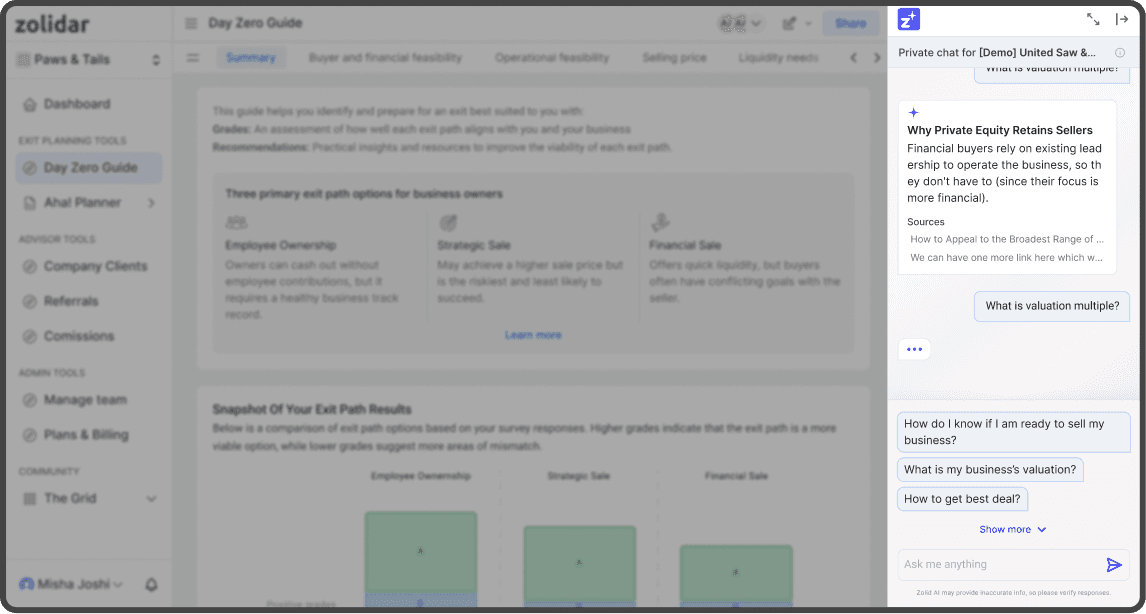
Scattered resources, one place to explore
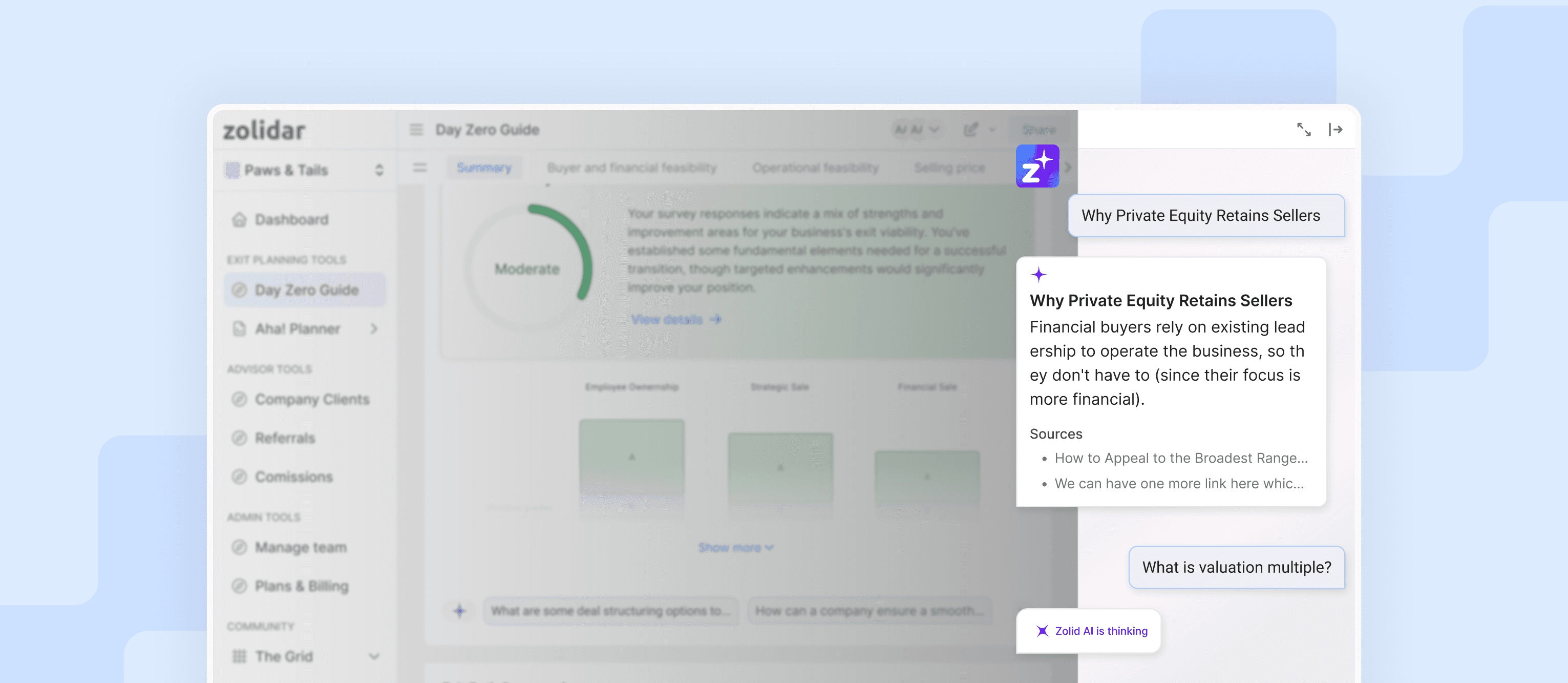
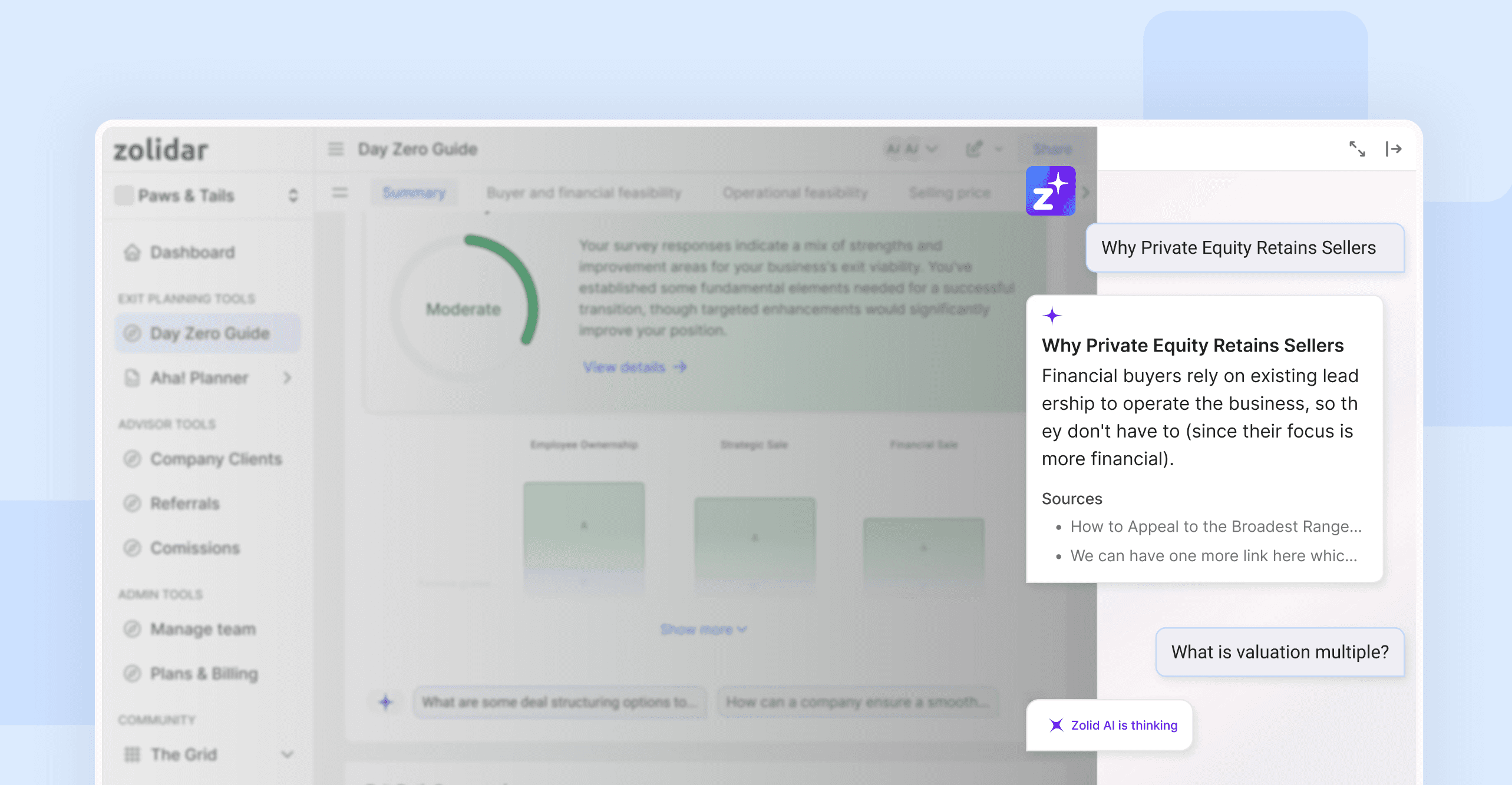
Summaries and relevant resources which is scattered across platform is expanded within the same unified experience.
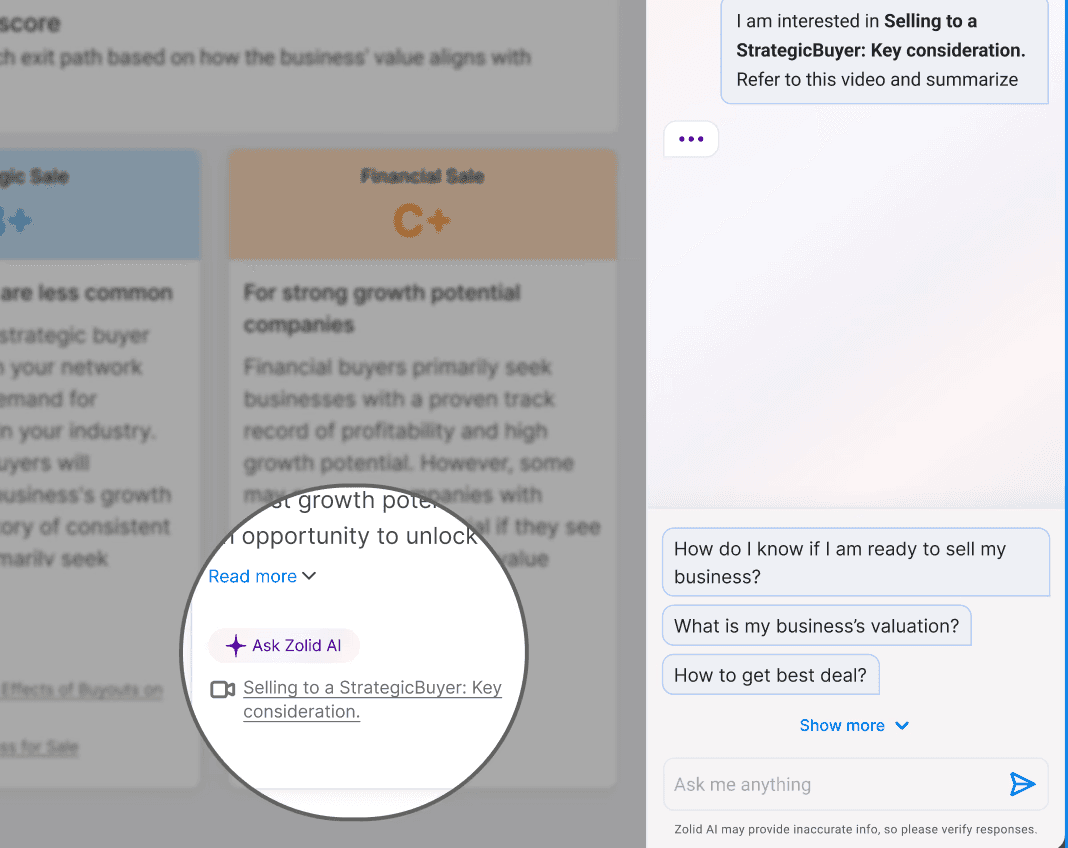
Prompts in reports, responses in chat
Prompts within reports triggers responses directly in the same interface, keeping users in one place.
Bringing clarity to financial reports & domain knowledge
Most business owners arrive at exit planning with no prior experience. The domain is complex, the terminology is unfamiliar, and the financial reports meant to inform their decisions can feel more overwhelming than helpful.
That is where Zolid AI comes in. Embedded directly into reports and across the platform, it surfaces plain-language explanations at the exact moment users need them, without pulling them away from what they are looking at or adding another step to an already complex process.
Considerations in building this
Reducing cognitive load without simplifying the content.
Surfacing the right explanation at the right moment.
Keeping users in context without pulling them away from the report.
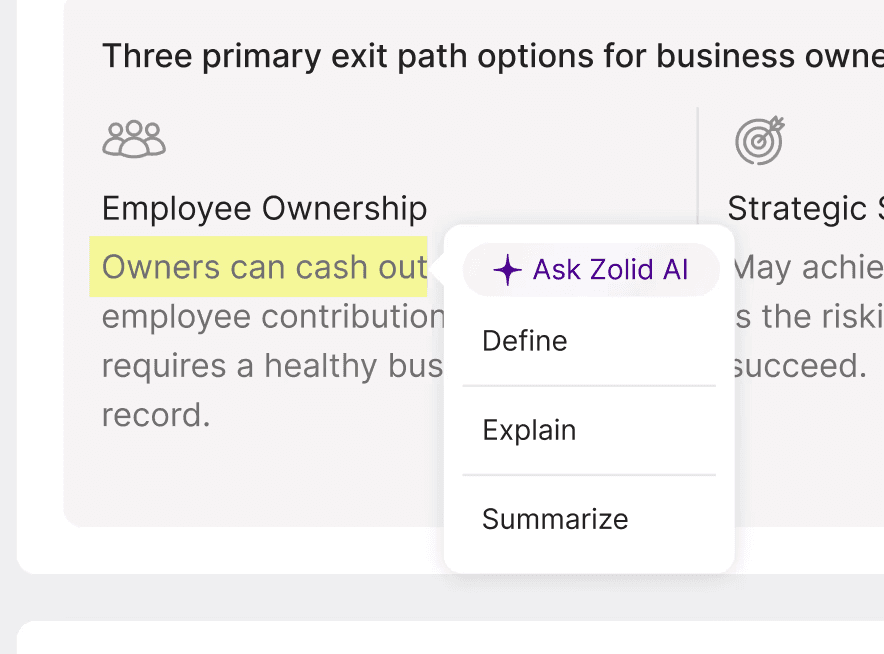
Highlight and ask
Users can highlight any text or graph within a report and instantly access contextual AI options, Define, Explain, or Summarize, turning any point of confusion into a moment of clarity without breaking their flow.
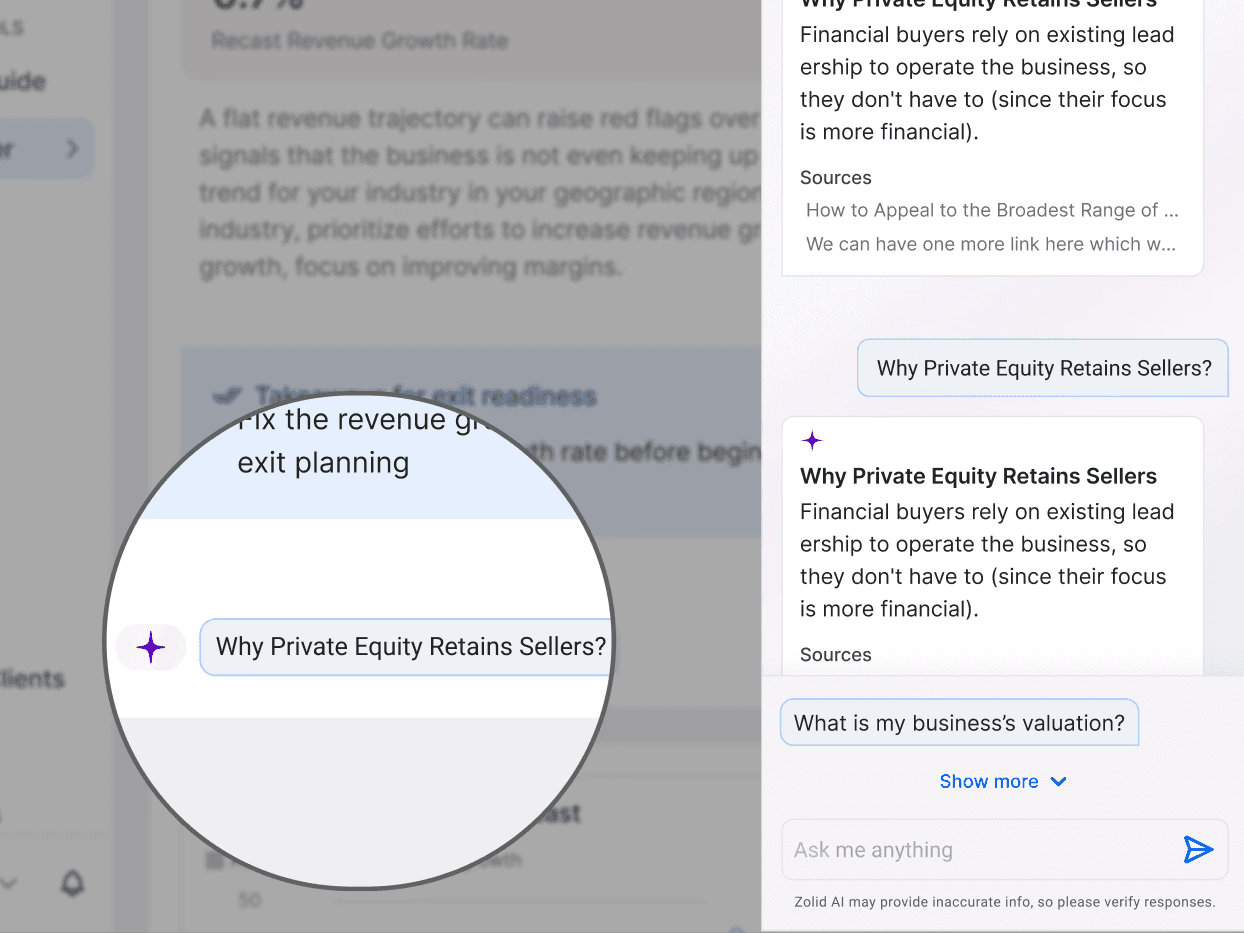
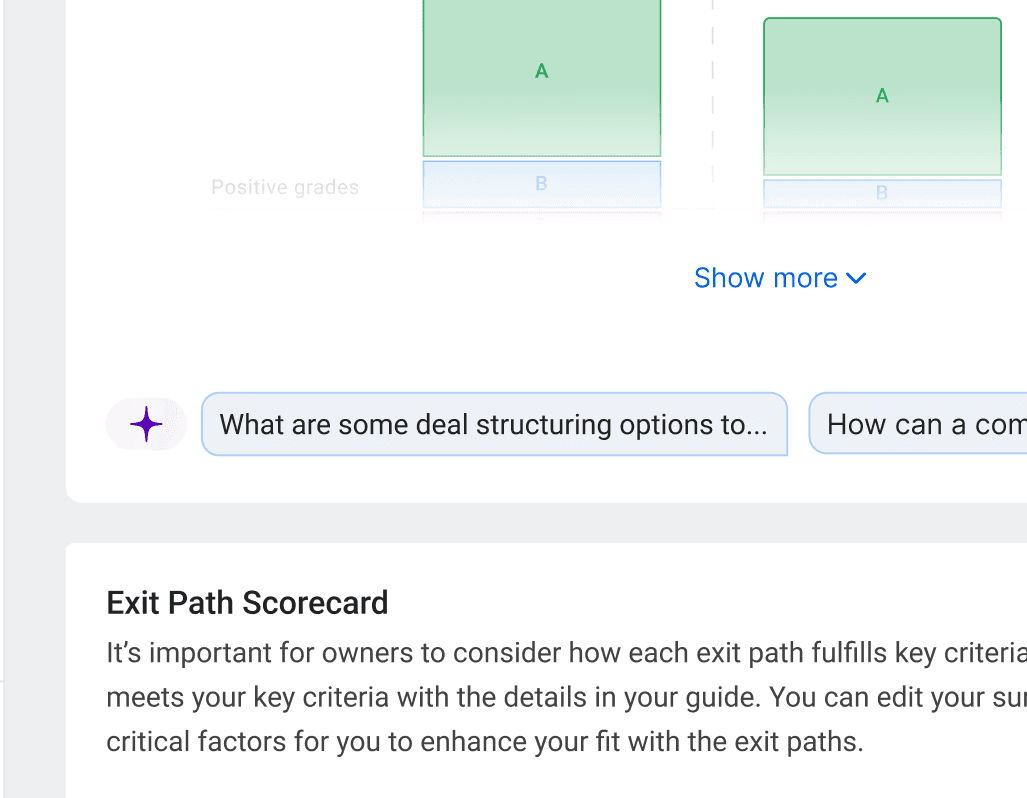
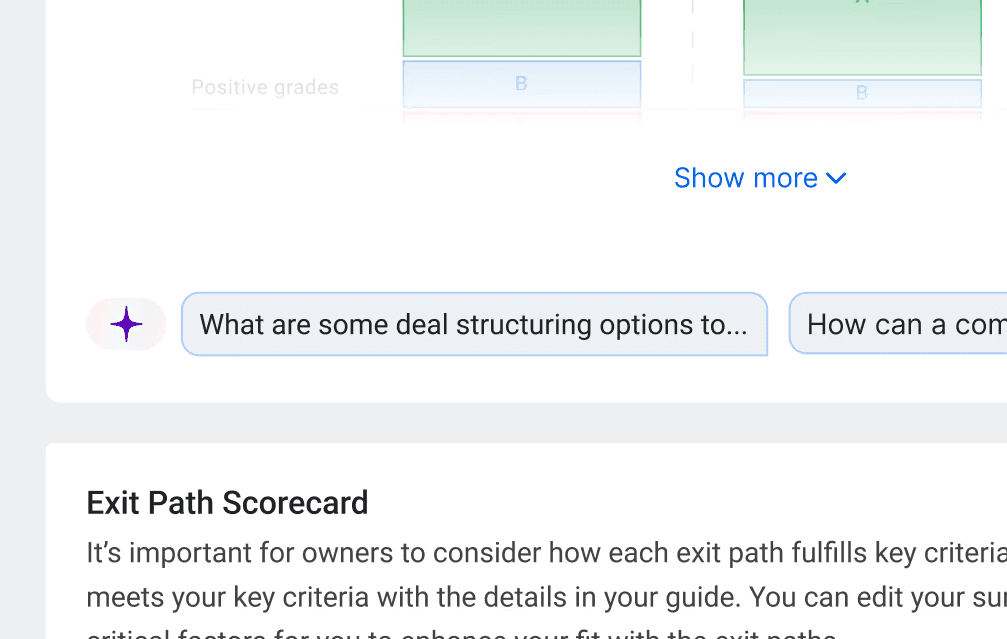
Built-in questions to get started
Pre-defined questions within reports gives users a starting point to explore concepts they had never encountered.
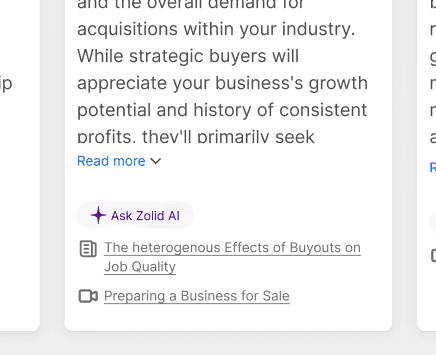
Resource chips, relevant to the context
Relevant resource chips surfaces domain knowledge resources directly in context for users to explore further.
Trust designed through community knowledge & transparency
In a domain this sensitive, users were older, financially cautious, and new to AI. Any sense of opaqueness around how the AI worked or where the information came from would break the experience entirely.
Zolid AI was grounded in The Grid, a community-built knowledge base where owners, advisors, and employee ownership experts contribute resources, answers, and insights. Combined with explicit trust signals built into every interaction, human-review transparency, private-only outputs, and clear disclosure patterns, users always had a reason to trust what the AI surfaced and felt in control of every step.
Considerations in building this
Designing transparency around where information came from.
Building confidence for users unfamiliar with both AI and the domain.
Making trust visible without making it feel like a warning.
Response citations
Response citations point back to the original resource or The Grid entry, so users can verify where the information came from and act with confidence.

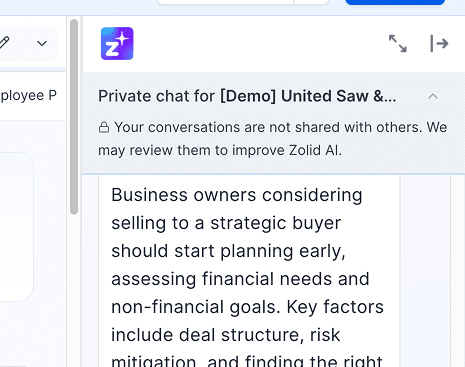
Private chat disclosure
Every chat session was private to the user, with a clear disclosure that conversations would not be shared with others.
Response quality tracking
Users can mark responses as helpful or not and regenerate if something feels off, giving them control in the moment and creating a feedback loop that makes Zolid AI more reliable over time.

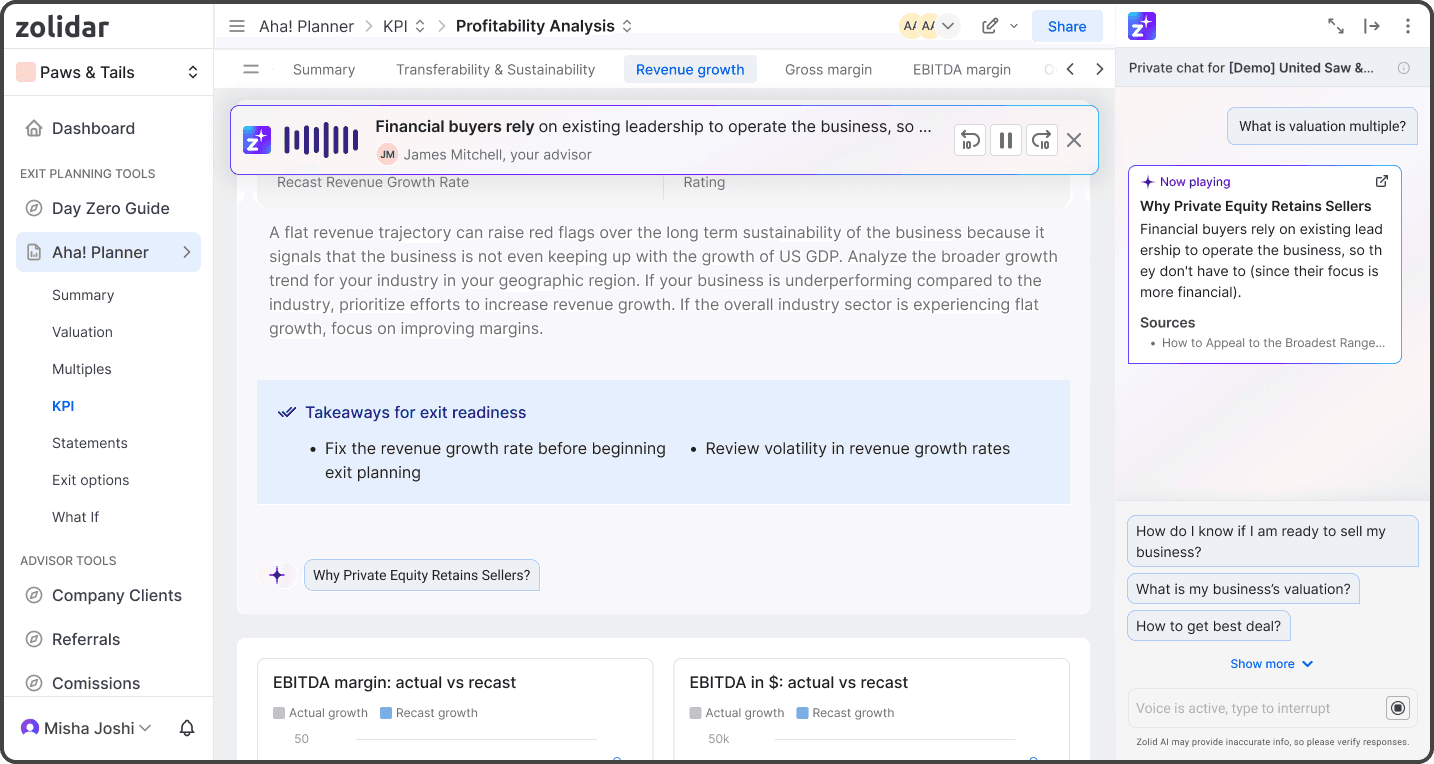
Closing the trust gap through voice
Advisors are the most trusted relationship a business owner has during an exit. But that trust was hard to extend to a digital product, especially one powered by AI. Voice UX was explored as a way to bridge that gap, bringing the advisor's presence into the product and making AI feel less like a tool and more like a natural extension of the advisory relationship.
Considerations in building this
Designing for trust through familiar, human voice.
Maintaining the advisor's authority while introducing AI.
Creating an experience that felt personal, not automated.
my learnings
Even smart AI needs to earn trust
Adding citations, quick actions, and feedback options was not just a nice-to-have. It was essential for helping people feel confident using Zolid AI day to day.
It is not just one experience, it is many
Advisors, business owners, and experts consume the same data in very different ways. Designing with personas in mind made it easier to tailor Zolid AI for actual workflows, not just general needs.
Mapping every features at once makes it scalable
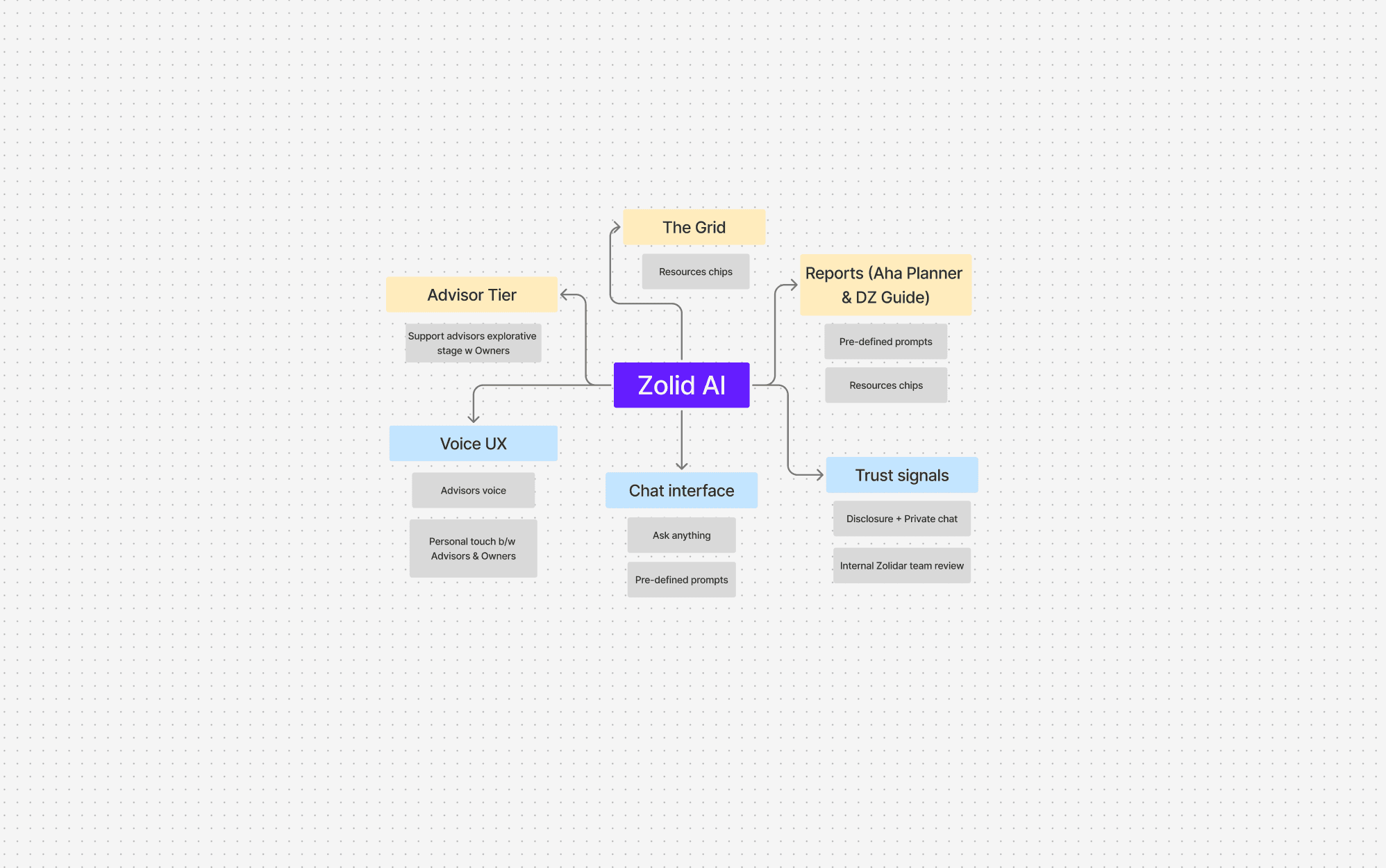
Making it consistent was harder than I originally thought. Mapping every interaction on a shared board helped that process significantly, versus designing in isolation for individual features regardless of whether they would ship that year or the next. That approach was what made it scalable.