Advisor Tier for Zolidar
Designing an Exit Planning and Employee Ownership Platform for Advisors
Summary
The Advisor Tier is a core part of Zolidar, designed to support professionals guiding business owners through exit planning and employee ownership transitions. I led the design and project management of the advisor experience, focusing on structuring client workflows, building a collaborative space for advisors and clients to work together, and embedding growth tools directly into the platform while aligning with Zolidar's business model.
Role
Design Lead
Project Manager
Interaction (IxD) Designer
User Experience (UX) Designer
User Interface (UI) Designer
Timeline
6 months
skills
Product thinking
System design
Interaction design
Market researcher
Accessibility design
Visual design
tools
Figma
Cursor
Bolt
V0
*Disclaimer
This case study covers only parts of the design process focusing mainly on my role within the project. I have retracted or changed portions of findings to conceal any confidential information.
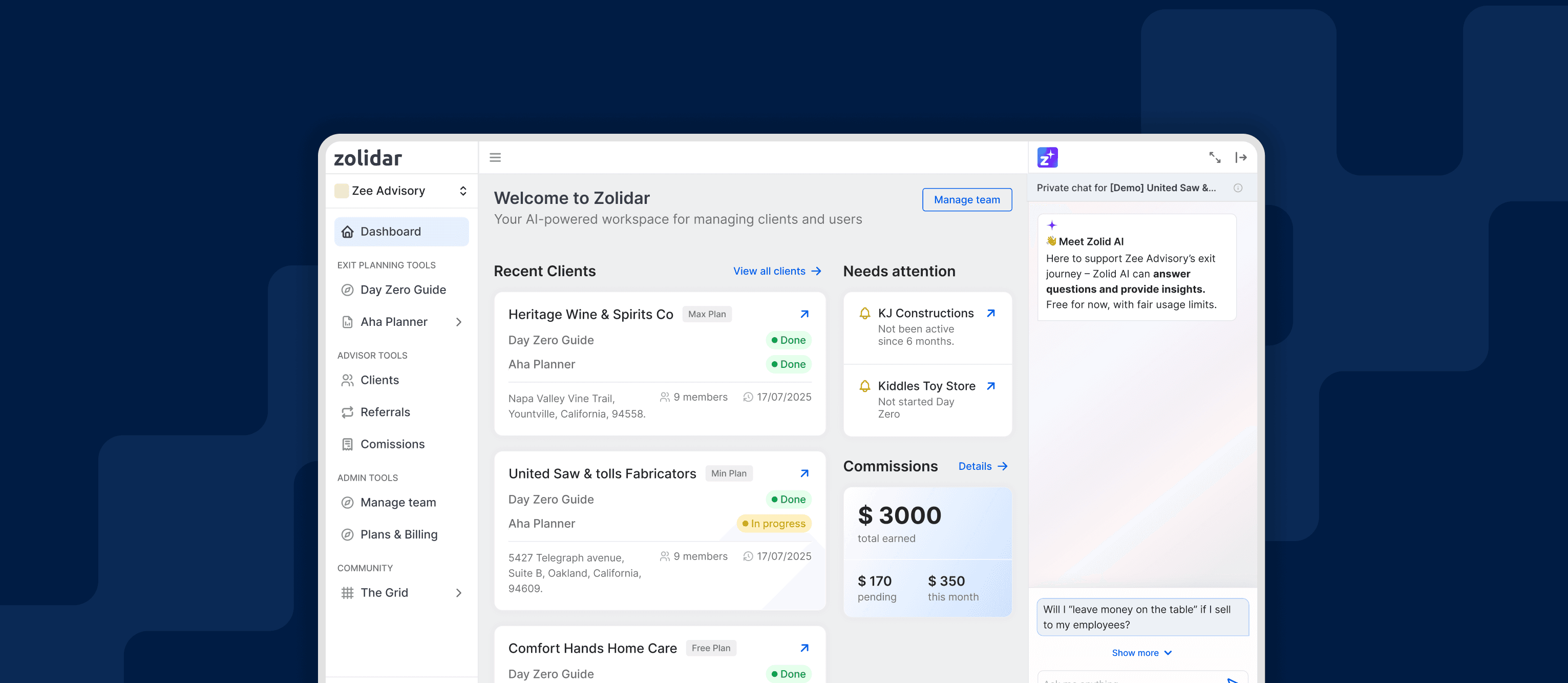
about Zolidar
project goal
*
Who are advisors?
In this case study, advisors are professionals who guide business owners through exit planning transitions. They help owners understand their exit options, interpret complex financial data, and navigate the path toward a successful exit or ownership transition.
Project objective
Design for advisor-first workflows
Structure the platform around how advisors actually think, analyze, and guide decisions, not the other way around.

Design to grow with the advisor
As advisors take on more clients, the platform should scale with them, without adding complexity or operational overhead.

Align product with business value
Ensure the advisor experience is not just usable but commercially meaningful, driving retention and long-term platform growth.
Understanding the Advisor Space
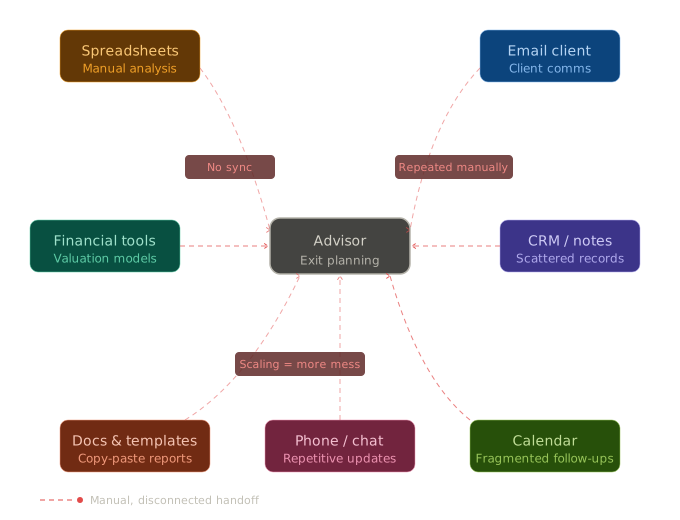
Advisors sit at the center of every exit planning decision, but their day-to-day was fragmented:
Analysis spread across multiple tools.
Client communication was repetitive.
Scaling meant more complexity, not more impact.
No structured system for managing clients.
Understanding Business Goals
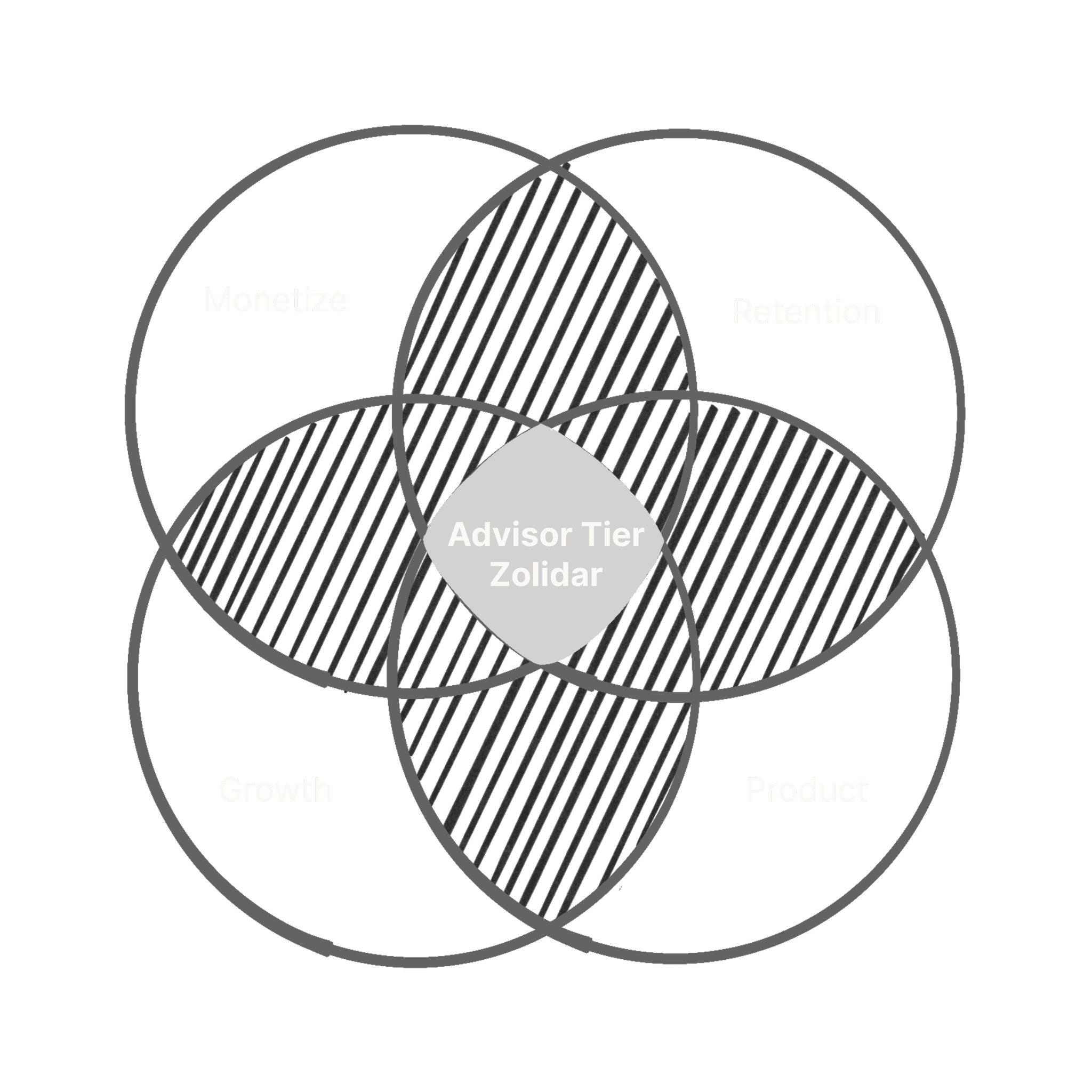
The Advisor Tier was not just a UX problem. It was central to how Zolidar grows, retains, and monetizes its most valuable users.
Monetize through value, not access.
Design for retention, not just conversion.
Drive growth through advisor expansion.
Align product value with business outcomes.
Breaking it down
final overview
Breaking it down
Breaking it down
final overview
*Note
Due to the confidential nature of this project under a Non-Disclosure Agreement (NDA) and the inclusion of designs and data pertaining to its forthcoming versions, have retracted or changed portions of findings to conceal any confidential information.

One place to manage every client
Advisor workflows were fragmented with no clear system for managing clients and decisions. Without structure, every client engagement started from scratch. And as practices grew, taking on more clients meant more cognitive load, not more impact.
A unified dashboard gave advisors the structure they were missing, one place to track, manage, and act across every client relationship.
Considerations in building this
Reducing context switching between clients.
Designing for advisors who manage clients at very different stages.
Giving advisors visibility without overwhelming them.
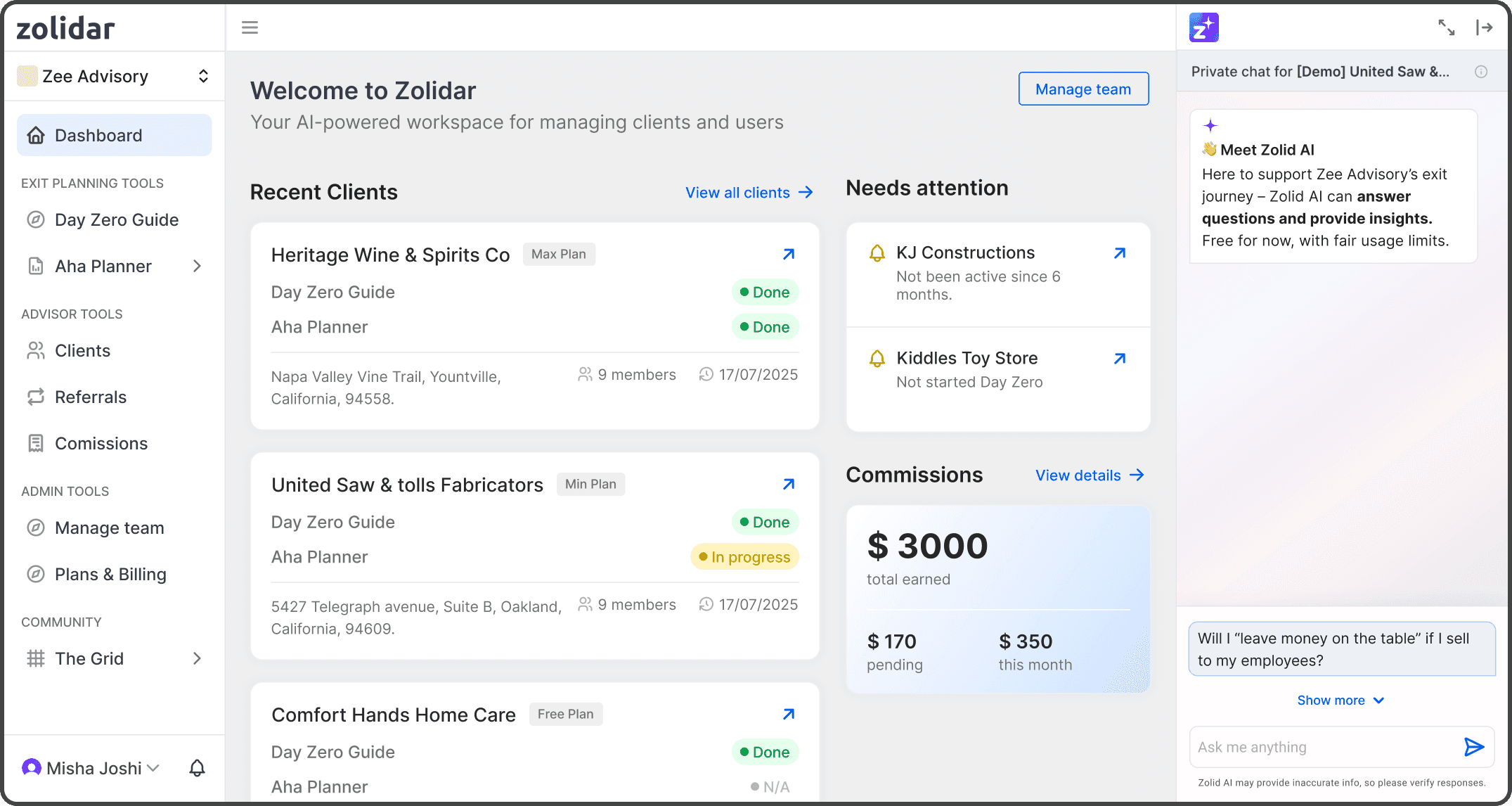
Advisor dashboard
A dashboard gave advisors a clear view of all their clients, where each one was in the exit planning journey, and which reports had been completed.
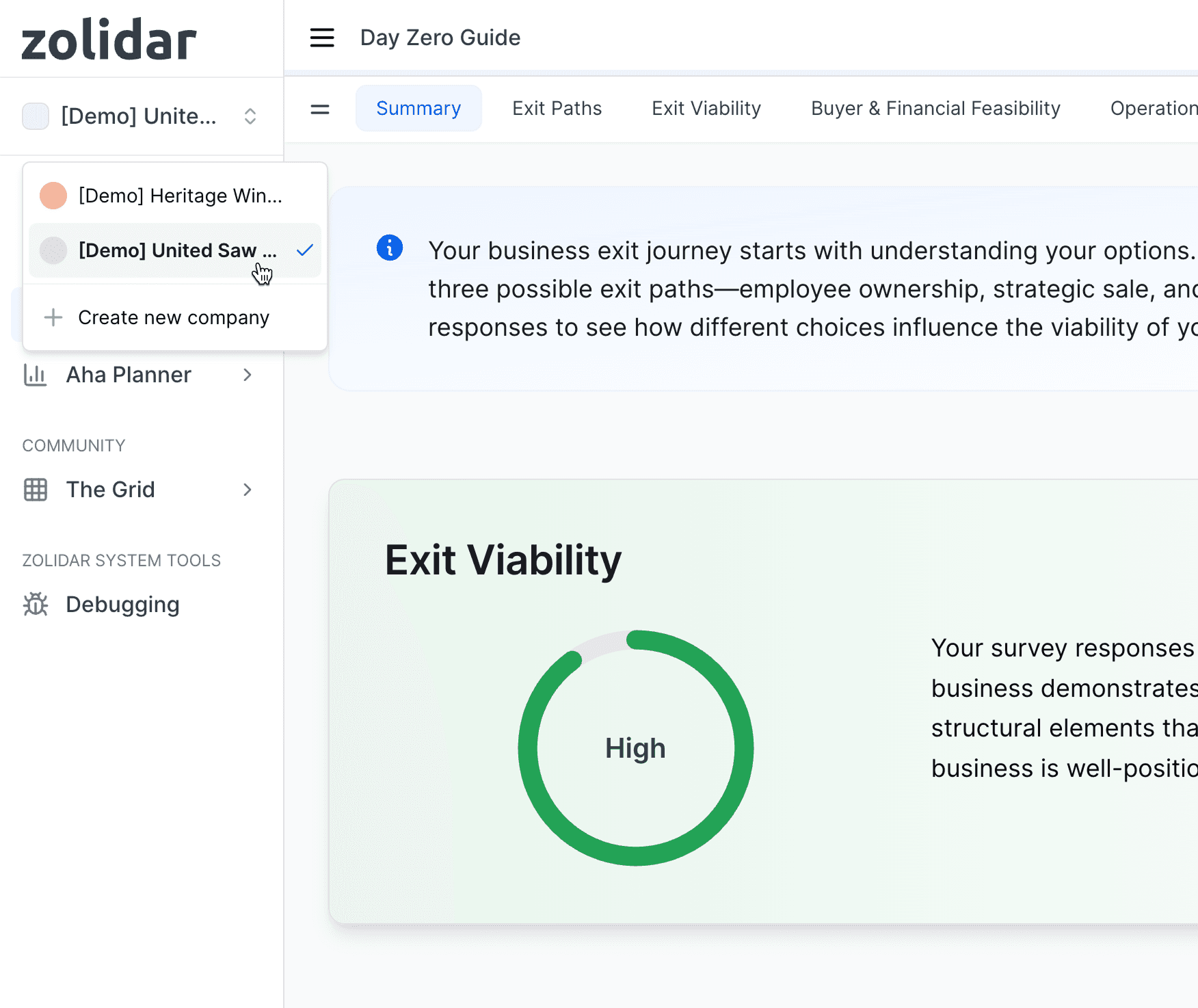
Company switcher
A quick company switcher made it easy to move between clients.
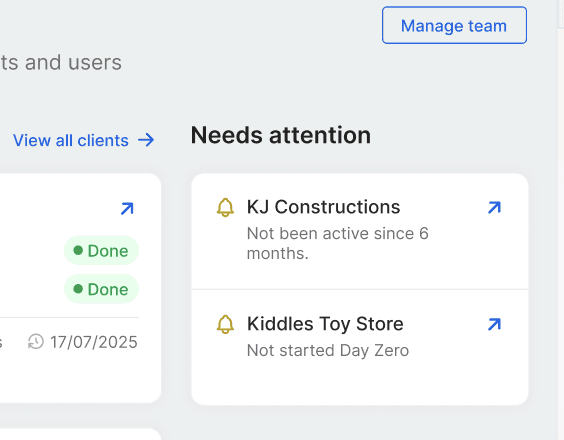
Priority and status indicators
Priority indicators helped advisors quickly identify which clients needed attention, reducing the mental load of managing multiple relationships at once.
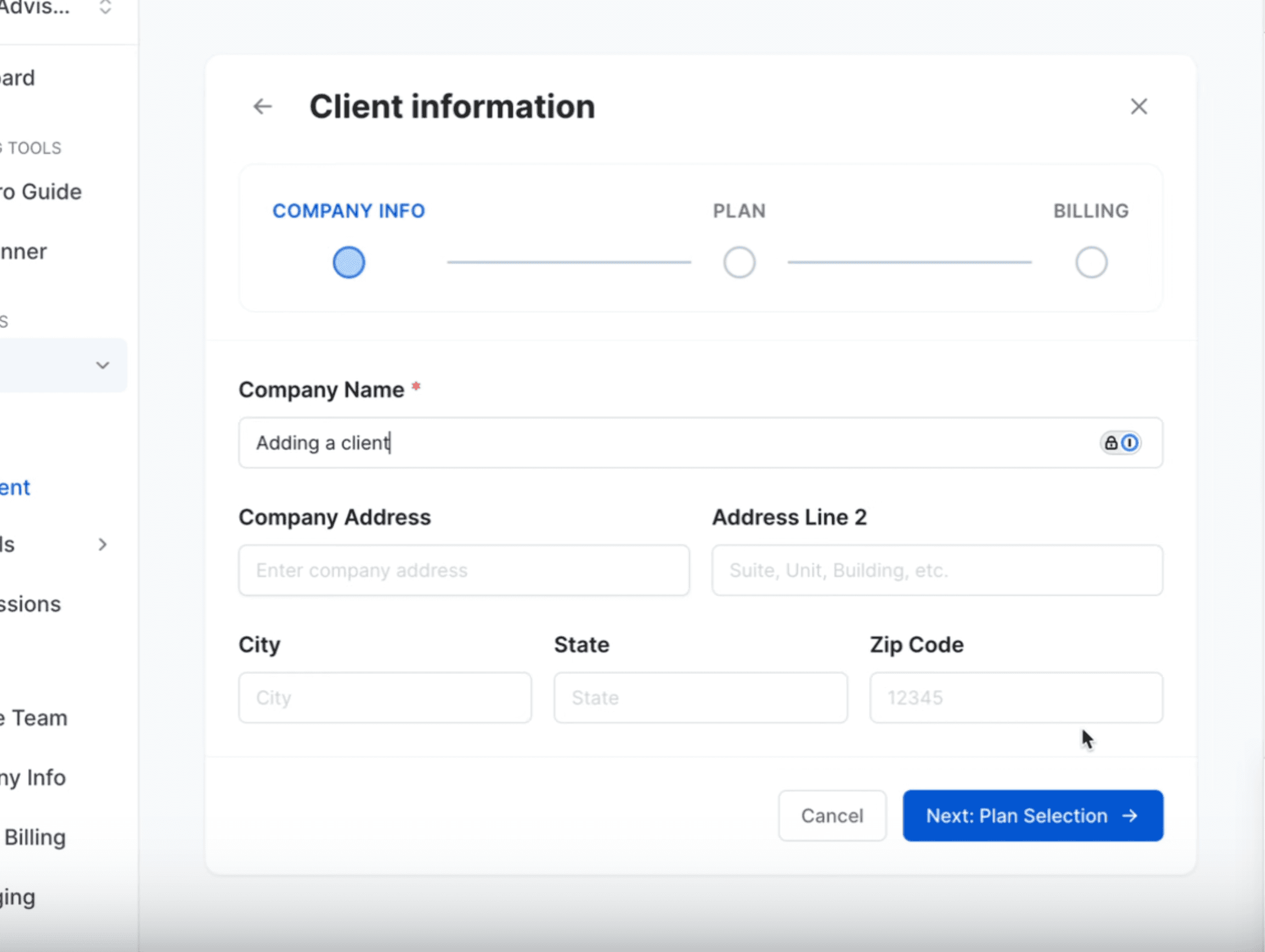
Quick client onboarding
A step-by-step onboarding flow let advisors set up new clients quickly, with customisation options based on each client's requirements.
A collaborative workspace for advisors and their clients
Advisors and clients were working in silos. Analysis lived in reports, feedback happened over email, and follow ups were scattered across calls and messages. There was no single place where both parties could come together, review the work, and move forward in sync.
A live collaborative workspace gave advisors and clients a shared place to communicate, review work, and move forward together, without anything falling through the cracks outside the platform.
Considerations in building this
Keeping all communication and collaboration within the product.
Reducing time spent on foundational explanation.
Designing collaboration to feel natural, not intrusive.
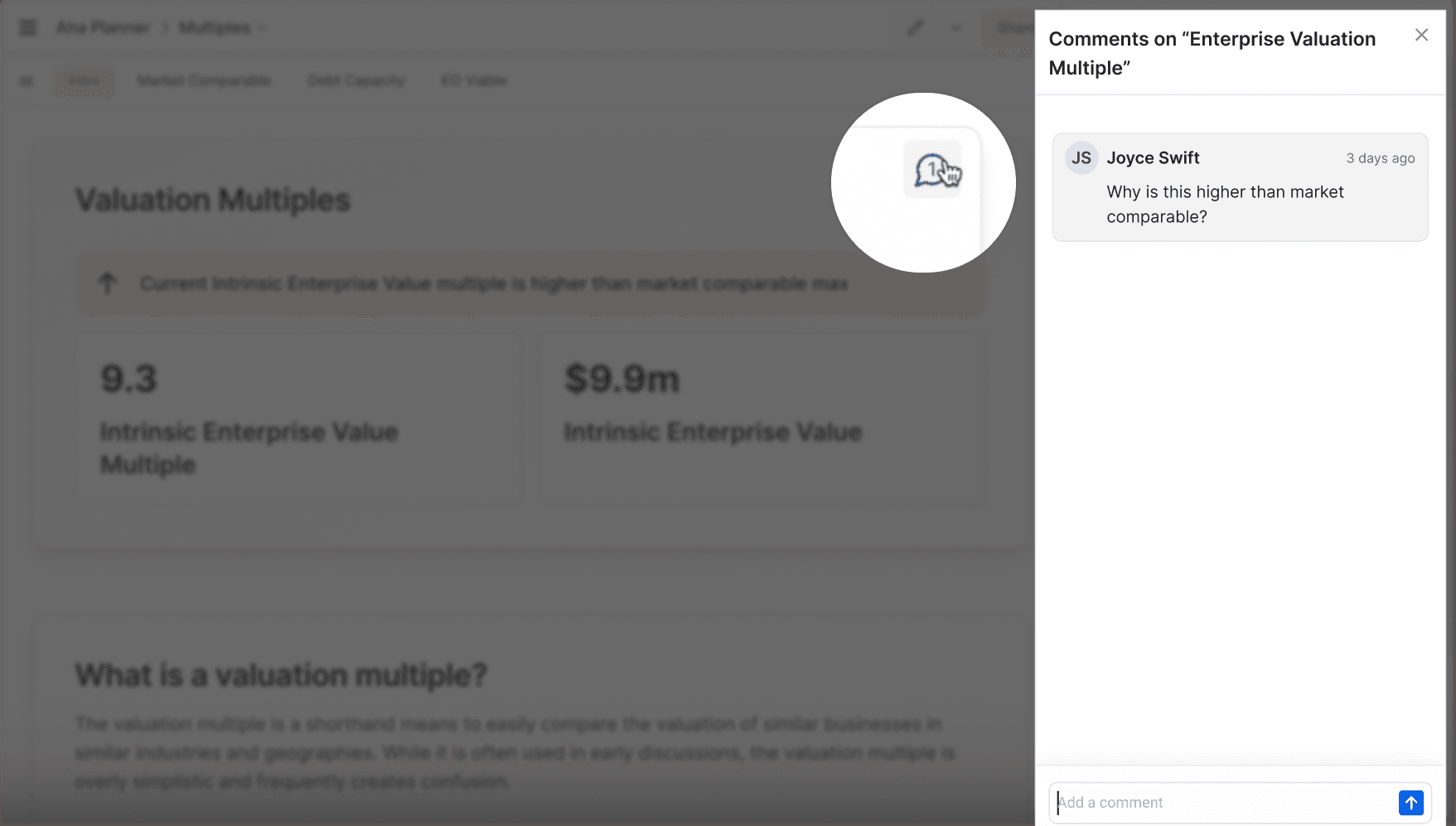
In-product commenting
A comment feature allowed advisors and clients to leave notes and replies directly within the product, keeping communication contextual and reducing back and forth outside the platform.
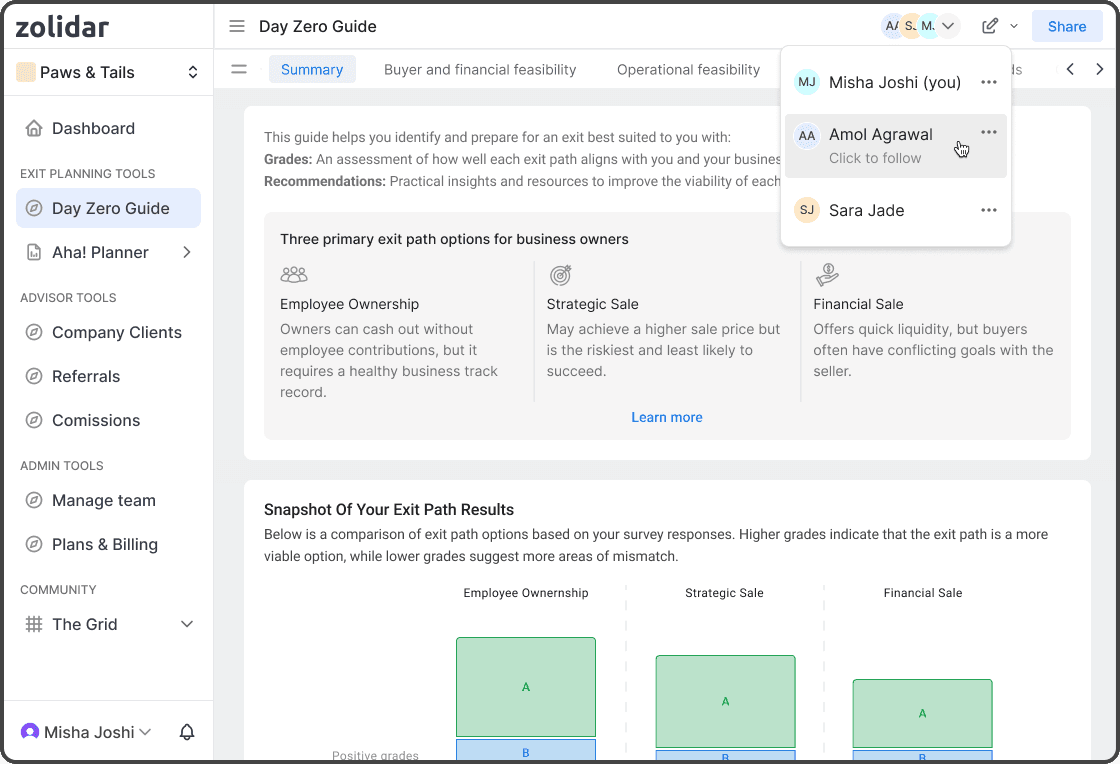
Real-time collaboration
A real-time collaboration feature showed when someone else was viewing a report, with the ability to follow that person through the reports, similar to how Miro handles live collaboration.
Commission tracking and referral discounts, built into the advisor workflow
Advisors already had the trust. The referral system gave them a way to act on it, managing commissions, setting client discounts, and tracking it all from one place inside the Zolidar platform.
That is why we built a referral system directly into the advisor workflow, giving advisors full control over how they split commissions and discounts, and a dedicated dashboard to track it all without switching tools.
Considerations in building this
Give advisors control over how they position the discount to their clients.
Make commission tracking transparent.
Designing the referral flow to feel like a natural part of onboarding.
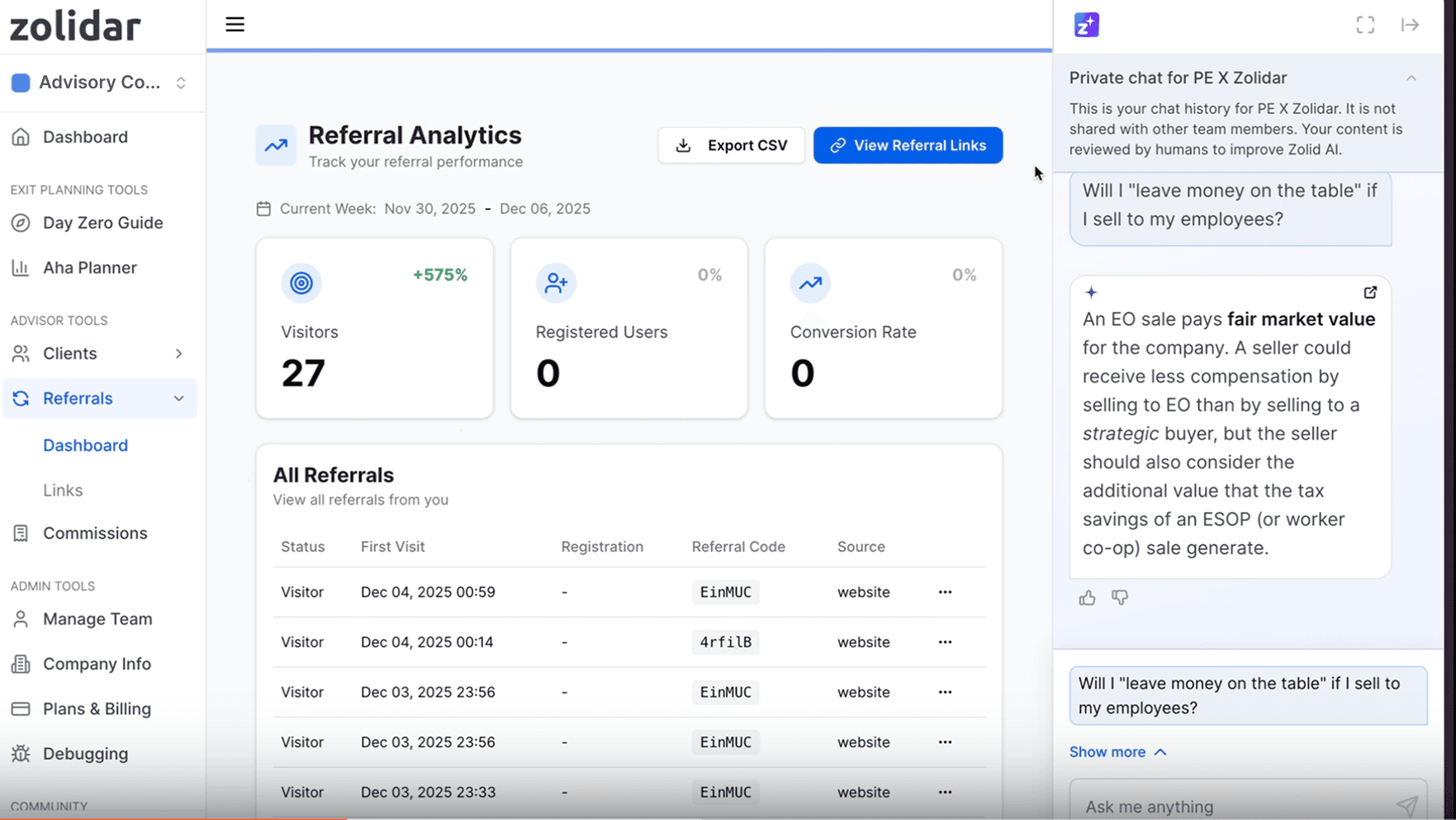
Referral dashboard
A dedicated referral dashboard let advisors track their referrals, commissions, and client discounts in one place.
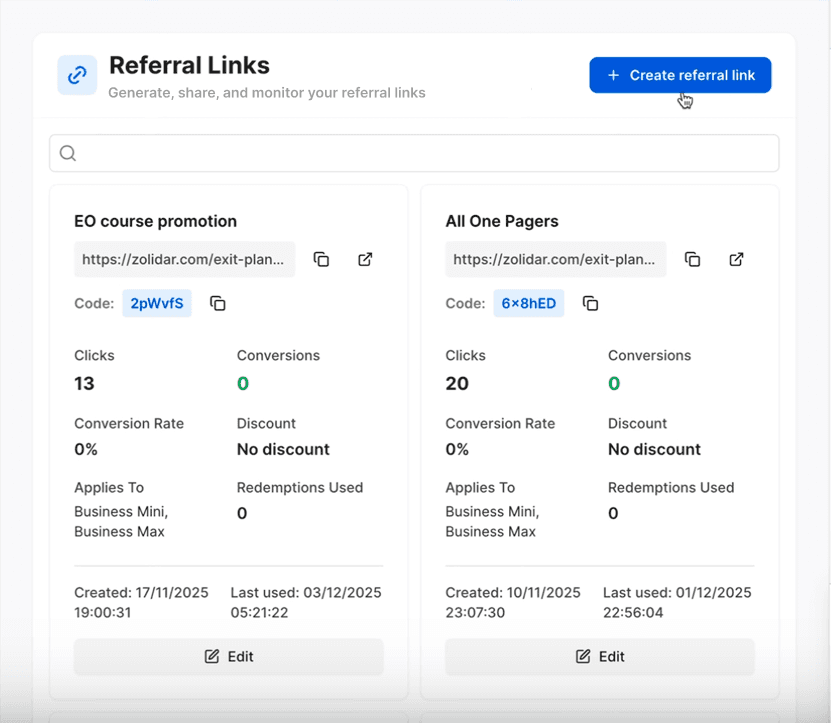
Referral code management
Advisors could manage, customize, and generate referral codes, track how each one was performing, and share them however worked best for their practice, whether through a newsletter, website, or directly with clients.
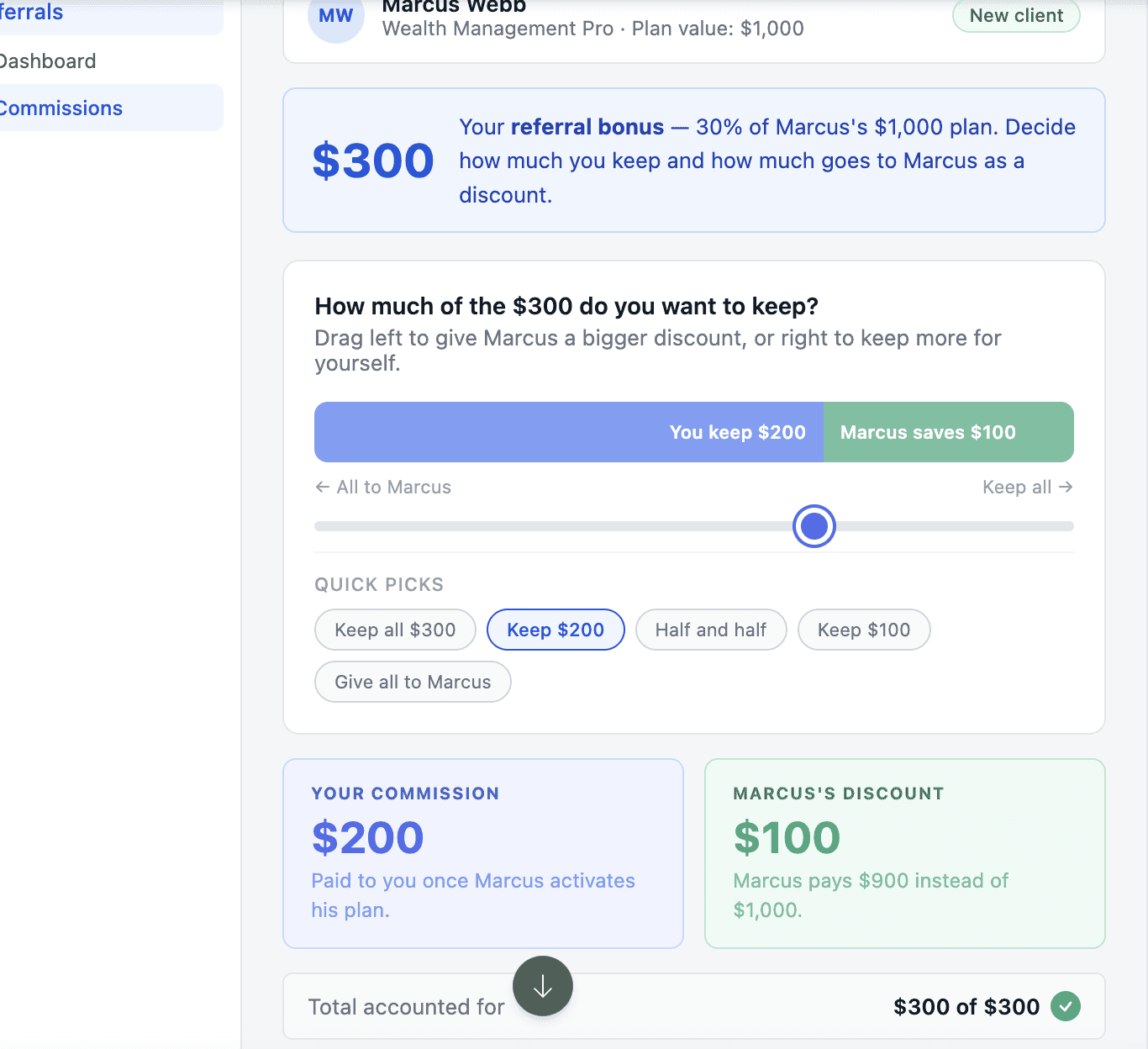
Commission and discount customization
During client onboarding, advisors could manually set how to split the 30% between their own commission and a discount passed to the client.
my learnings
Key takeaways from building a scalable platform for domain experts
my learnings
Experts need structure, not simplification
Advisors know their domain deeply. The challenge was not simplifying the experience for them, it was giving them a structured system that matched the complexity of how they actually work without getting in their way.
Scalability is both a UX and business problem
Designing for one advisor managing one client is straightforward. Designing for an advisor managing ten clients at different stages, with different needs, is a systems problem. Getting that right required thinking about the product as an operating system, not a set of features.
New capabilities work best when they blend into existing habits
The features that stuck were the ones that felt like a natural extension of what advisors were already doing. The ones that required significant behaviour change were the ones that got ignored. The real learning was finding the balance between introducing new capabilities and blending them into familiar patterns, so advisors could adopt without friction and still benefit from what was new.
Managing design and project simultaneously sharpened my thinking
Owning both the design and the project management meant every decision had to be defensible from both a user and a business perspective. It made me a sharper, more deliberate designer.
Iterate, Iterate, & Iterate
Designing a platform for experts in a complex domain is not something you get right the first time. Every round of feedback, every edge case, and every conversation with an advisor revealed something new. The learning was not in the final design but in everything that changed along the way.